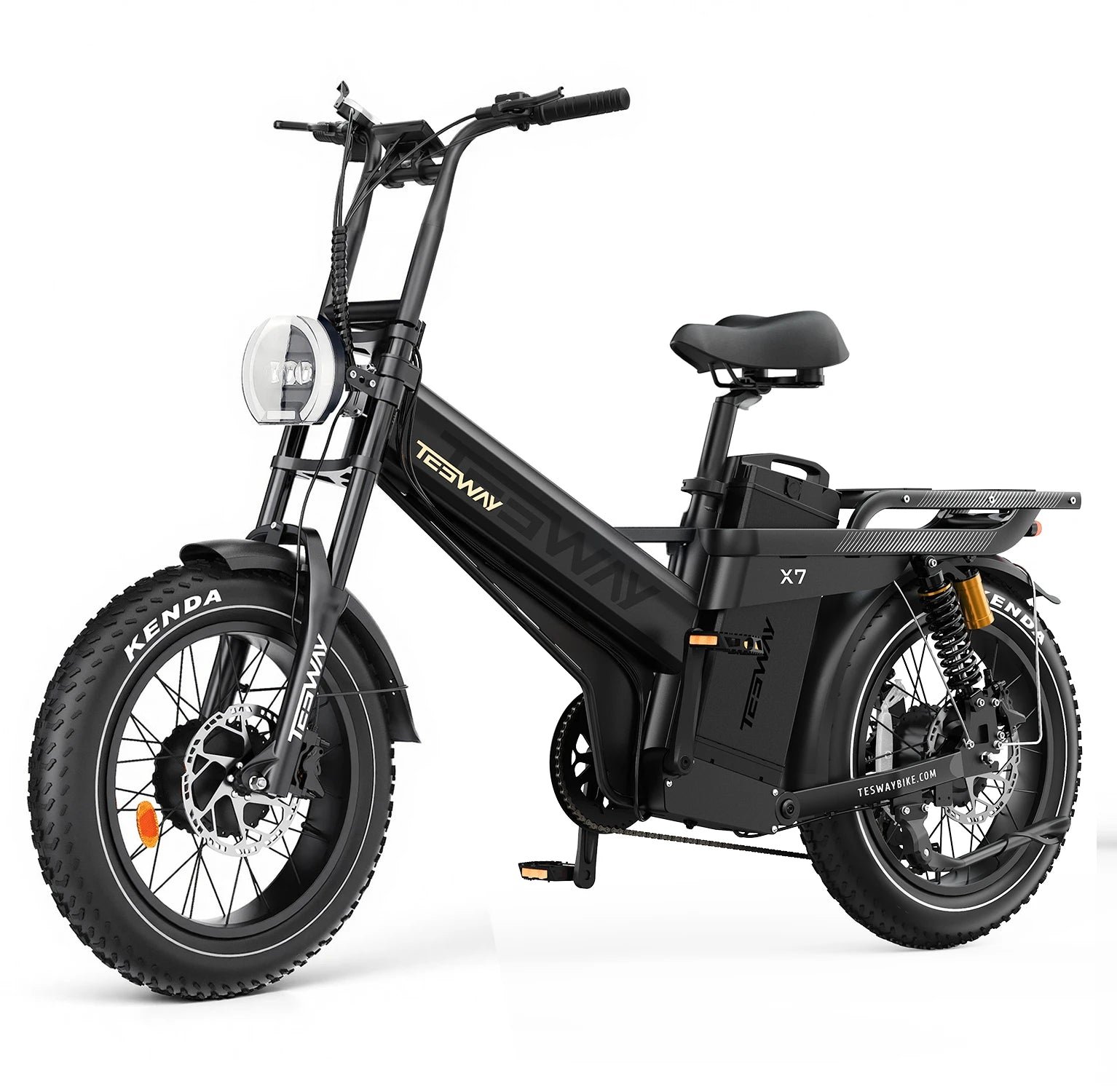
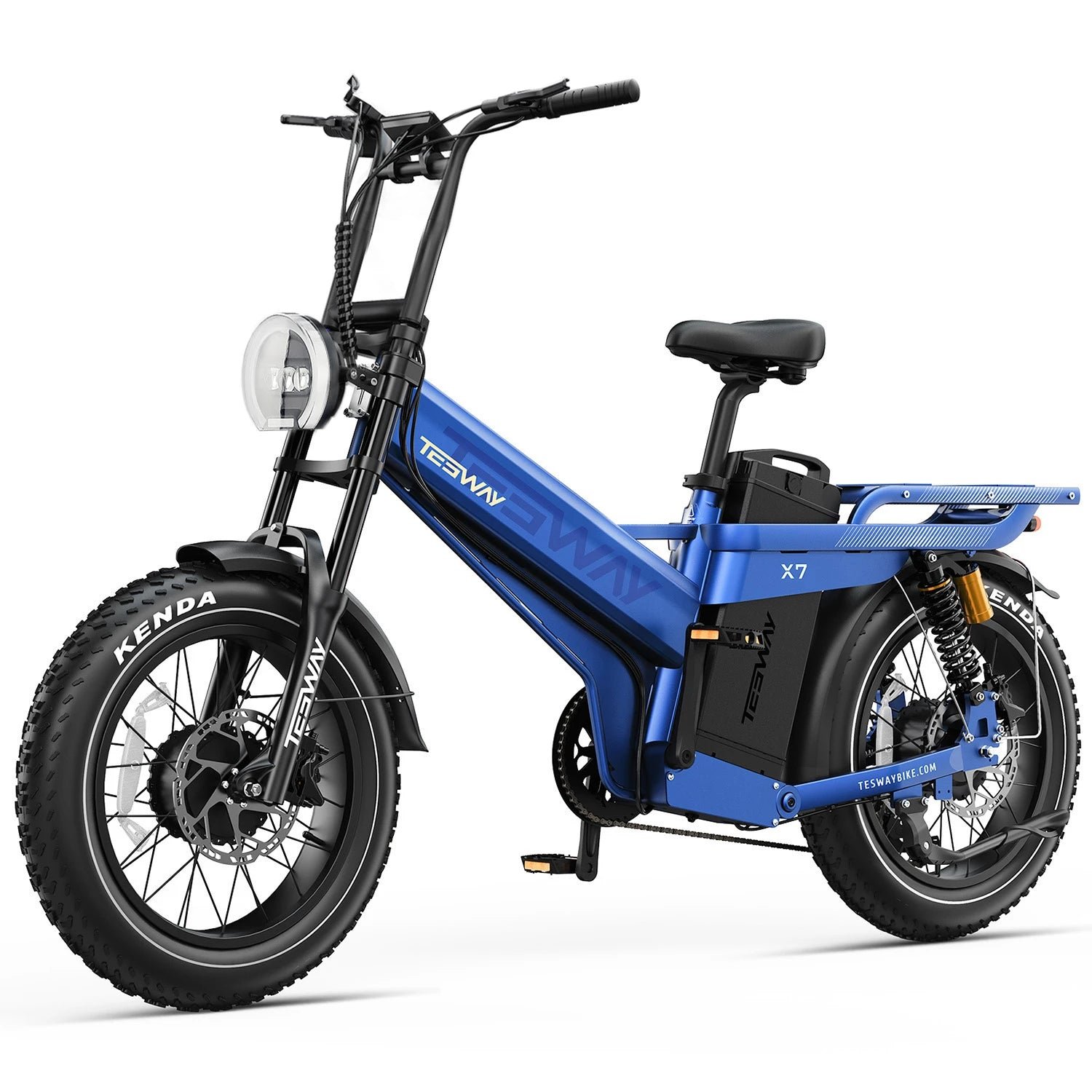
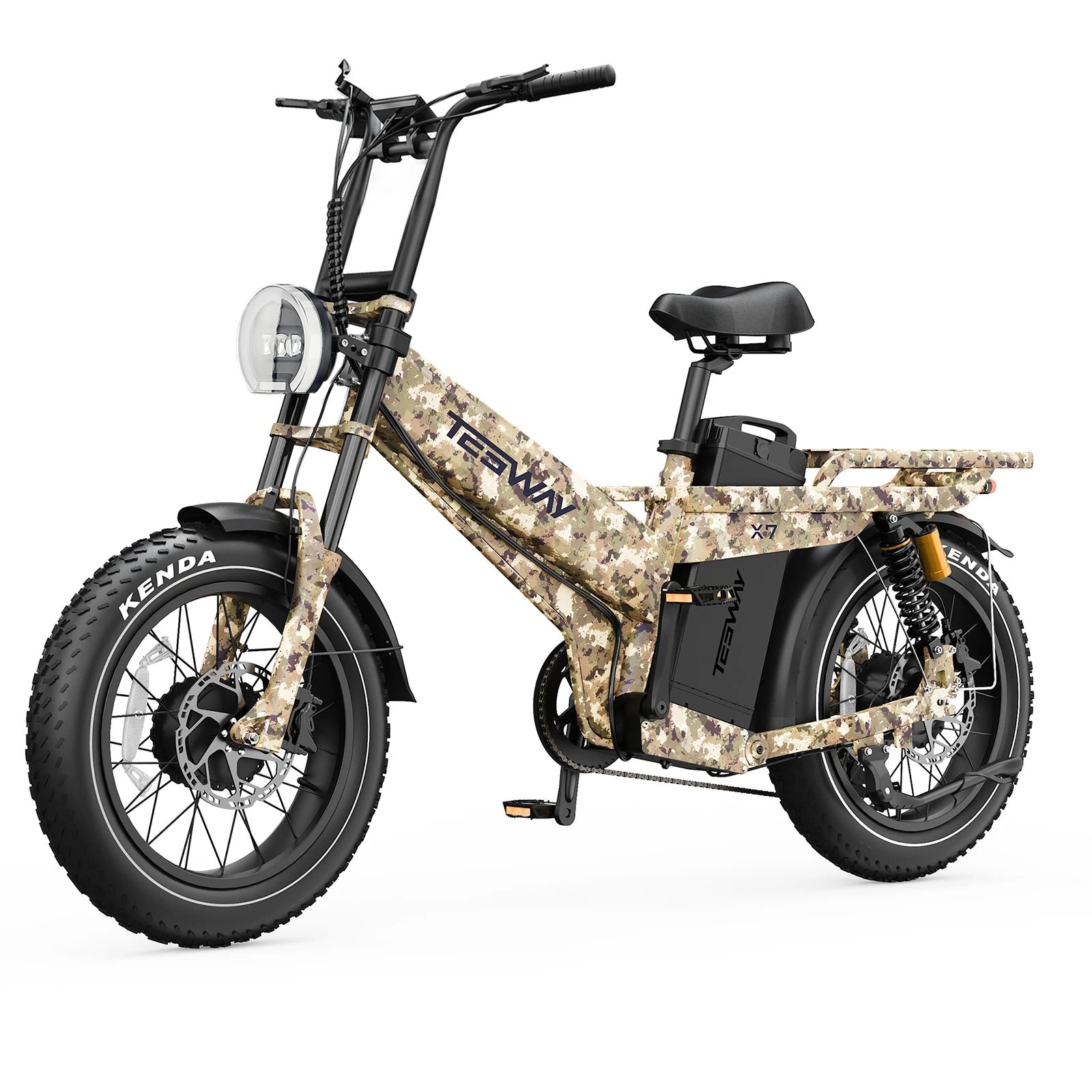
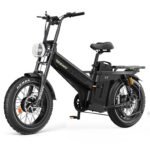
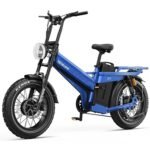
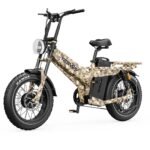
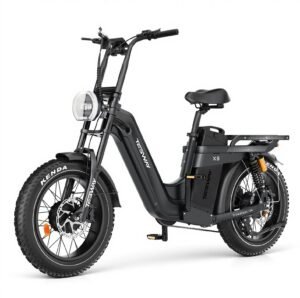
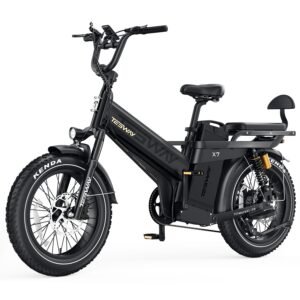
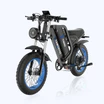
The Tesway X7 AWD electric bike is a high-output, dual-motor fat-tire e-bike built for experienced riders who need added traction, substantial battery capacity, and strong performance across changing terrain. Its front and rear motors create an all-wheel-drive system with up to 3,600W of combined peak output and 200 Nm of combined torque.
A 52V 60Ah battery supports long riding schedules, while full suspension and wide fat tires help the bike handle rough pavement, gravel, loose ground, and steep routes. The large battery and dual-motor system also make the X7 AWD heavier and more powerful than a conventional commuter e-bike.
Speed, range, and performance figures are based on manufacturer testing and should be used for comparison. Actual results depend on motor mode, rider and cargo weight, speed, pedal-assist level, throttle use, terrain, elevation, temperature, wind, tire pressure, battery condition, and maintenance.
The listed motor output and maximum speed may exceed common US e-bike class limits. Check state and local rules covering motor power, assisted speed, throttle operation, road access, bike lanes, trails, registration, licensing, insurance, and private-property use before riding.
Key Specifications
| Feature | Specification |
|---|---|
| Drive System | Dual-motor all-wheel drive |
| Peak Motor Output | Up to 3,600W combined |
| Combined Torque | Up to 200 Nm |
| Maximum Speed | Manufacturer-listed speed of up to 38 mph |
| Battery | 52V 60Ah |
| Battery Capacity | 3,120Wh |
| Maximum Range | Manufacturer-listed pedal-assist range of up to 200 miles |
| Suspension | Full-suspension system |
| Tires | Fat tires for mixed-surface traction |
| Brakes | Hydraulic disc brakes |
| Maximum Payload | 400 lb |
| Recommended Rider | Experienced riders comfortable with a heavy, high-output e-bike |
| Primary Use | Long recreational rides, hills, mixed surfaces, and utility riding |
Dual-Motor AWD Performance
The front and rear motors work together to provide all-wheel-drive traction. Tesway lists up to 3,600W of combined peak output and 200 Nm of torque, supporting acceleration, climbing, and riding across loose or uneven surfaces.
Dual-motor mode may be useful on steep hills, gravel, soft ground, or routes where additional traction is needed. On flatter roads or less demanding rides, using a single motor or lower assistance level can reduce power consumption and extend available range.
The additional output also requires careful throttle control and longer stopping distances. New riders should become familiar with the bike’s acceleration, braking, and low-speed handling in a controlled area before using its higher power settings.
Battery and Range
The X7 AWD uses a 52V 60Ah battery with 3,120Wh of listed capacity. Tesway lists a maximum pedal-assist range of up to 200 miles under its testing conditions.
The 200-mile figure should not be treated as a guaranteed distance for every ride. It represents a maximum result that may require low assistance, moderate speed, favorable terrain, and controlled test conditions.
Dual-motor use, frequent acceleration, throttle riding, steep hills, heavy cargo, low temperatures, wind, and high speeds can reduce range substantially. Riders seeking the longest possible distance should use lower assistance settings, maintain proper tire pressure, and engage both motors only when needed.
Speed and Riding Control
Tesway lists a maximum speed of up to 38 mph. Actual speed depends on battery charge, rider and cargo weight, terrain, wind, tire pressure, motor settings, and applicable restrictions.
At higher speeds, the bike requires greater braking distance and more deliberate steering input. Riders should reduce speed on loose surfaces, near pedestrians, in poor visibility, and when carrying cargo.
State and local rules may restrict where higher-speed or high-output electric bikes can be operated. An off-road setting does not automatically make that speed legal on public streets, bike paths, parks, or trails.
Full Suspension
The full-suspension system helps absorb vibration and impacts from rough pavement, gravel, uneven roads, and suitable recreational terrain.
Suspension can improve comfort and tire contact, but it does not make the bike suitable for every mountain-bike trail, jump, or technical off-road route. Riders should choose terrain that matches their ability and the manufacturer’s intended use for the bike.
Fat Tires and AWD Traction
The wide tires provide a broad contact area for added grip and stability on mixed surfaces. When combined with the dual-motor AWD system, they can support better traction on loose ground, hills, gravel, and uneven routes.
Fat tires also create more rolling resistance than standard bicycle tires. Correct tire pressure is important for balancing grip, comfort, steering response, and battery range.
Hydraulic Disc Brakes
The X7 AWD uses hydraulic disc brakes to provide controlled stopping support for its weight, speed, and motor output.
Brake pads, rotors, hoses, and fluid systems should be inspected regularly. Riders should not continue using the bike if braking feels weak, inconsistent, noisy, or unusually soft.
Added cargo and higher speeds increase stopping distance, even with hydraulic brakes.
Payload and Utility Use
Tesway lists a maximum payload capacity of 400 lb. This total includes the rider and anything carried on or attached to the bike.
A high payload rating does not mean every rack, basket, seat, or accessory can carry the same amount. Each accessory may have a separate load limit that must also be followed.
Distribute cargo evenly and secure it before riding. Added weight can affect acceleration, steering, tire pressure, range, and braking distance.
Recommended Use
The Tesway X7 AWD may be suitable for:
- Experienced e-bike riders
- Long recreational rides
- Steep or changing terrain
- Gravel and mixed-surface routes
- Riders who need additional AWD traction
- Utility riding with properly secured cargo
- Riders who want extended battery capacity
- Suitable private-property or approved off-road use
It may not be the best choice for buyers seeking a lightweight commuter, easy stair carrying, compact storage, or the handling of a conventional bicycle.
Before You Order
Review the selected configuration and confirm the current motor, battery, equipment, dimensions, bike weight, rider fit, included accessories, and delivery details before placing your order.
Check the rules that apply where the bike will be used. Its motor output and listed maximum speed may place it outside standard Class 1, Class 2, or Class 3 e-bike requirements in some states or municipalities.
Frequently Asked Questions
When should I use both motors?
Dual-motor mode may provide additional traction and acceleration on steep climbs, gravel, loose surfaces, and demanding routes.
For flatter roads or longer rides, using a single motor or lower assistance setting may reduce battery consumption.
Can the Tesway X7 AWD travel 200 miles per charge?
Tesway lists up to 200 miles of pedal-assist range under manufacturer test conditions. This should be treated as a maximum comparison figure rather than a guaranteed real-world distance.
Actual range depends heavily on motor selection, speed, assistance level, throttle use, rider and cargo weight, terrain, temperature, wind, tire pressure, and battery condition.
How fast can the Tesway X7 AWD go?
The manufacturer lists a maximum speed of up to 38 mph.
Actual speed varies with riding conditions and settings. State and local laws may prohibit high-speed operation on public roads, bike lanes, parks, or trails.
Is the X7 AWD a standard Class 1, Class 2, or Class 3 e-bike?
Its listed motor output and maximum speed can exceed the limits commonly applied to standard US e-bike classes.
Classification depends on the bike’s settings, throttle operation, total motor power, assisted speed, equipment, and applicable state or local law.
Is the X7 AWD suitable for inexperienced riders?
Its acceleration, weight, speed, and dual-motor power make it better suited to riders who already understand high-output e-bike handling.
New owners should begin at low power in a controlled area and become familiar with braking, turning, throttle response, and stopping distance.
Will dual-motor mode reduce the riding range?
Usually, yes. Powering both motors requires more energy than using one motor under similar conditions.
The effect varies with terrain, speed, acceleration, rider weight, and how frequently AWD is engaged.
What is the maximum payload capacity?
Tesway lists a maximum payload capacity of 400 lb, including the rider and all cargo.
Accessories such as racks and baskets may have lower individual limits, which must also be followed.
Can the X7 AWD be used on public roads?
Public-road legality depends on state and local rules governing motor power, assisted speed, throttle operation, equipment, registration, licensing, insurance, and vehicle classification.
Check the applicable regulations before purchase and use.
Does AWD improve traction in every situation?
AWD can provide additional drive traction, but it does not prevent skidding or loss of control.
Tire condition, tire pressure, braking input, speed, surface conditions, and rider technique still affect grip and stability.
Reviews
There are no reviews yet.